A chimney works hard every winter. It pulls smoke out of your home and keeps your fireplace safe. When it starts to fail, it rarely fails loudly. Most signs of chimney problems show up as small stains, smells, or sounds that are easy to miss if you are not looking for them.
We work on chimneys across Cork every week. The early signs are almost always easy to spot if you know where to look.
This guide walks you through the warning signals, what they mean, and when to book a chimney inspection. It is written for normal homeowners, not for tradespeople, so you can act on it the same day.
Why Early Chimney Damage Detection Matters
Small chimney issues turn into big ones fast. A hairline crack lets water in. Water freezes, expands, and breaks the brick apart. Within a season or two, you can face full chimney damage repair instead of a simple fix that would have cost a fraction of the price.
Early action also keeps your family safe. A damaged chimney can leak carbon monoxide into the room. A blocked flue can start a chimney fire. Both are silent, and both are preventable with regular fireplace inspection. A working carbon monoxide alarm is a non-negotiable backup, but it should never replace yearly servicing.
Insurers also look closely at maintenance records when a claim is made. A clear service history can be the difference between a fast payout and a refused claim after storm damage.
12 Clear Signs of Chimney Problems
Walk around your home and look up. Then step inside and look at the fireplace. The signs below cover both views, so you can build a full picture of the chimney’s condition in less than half an hour.
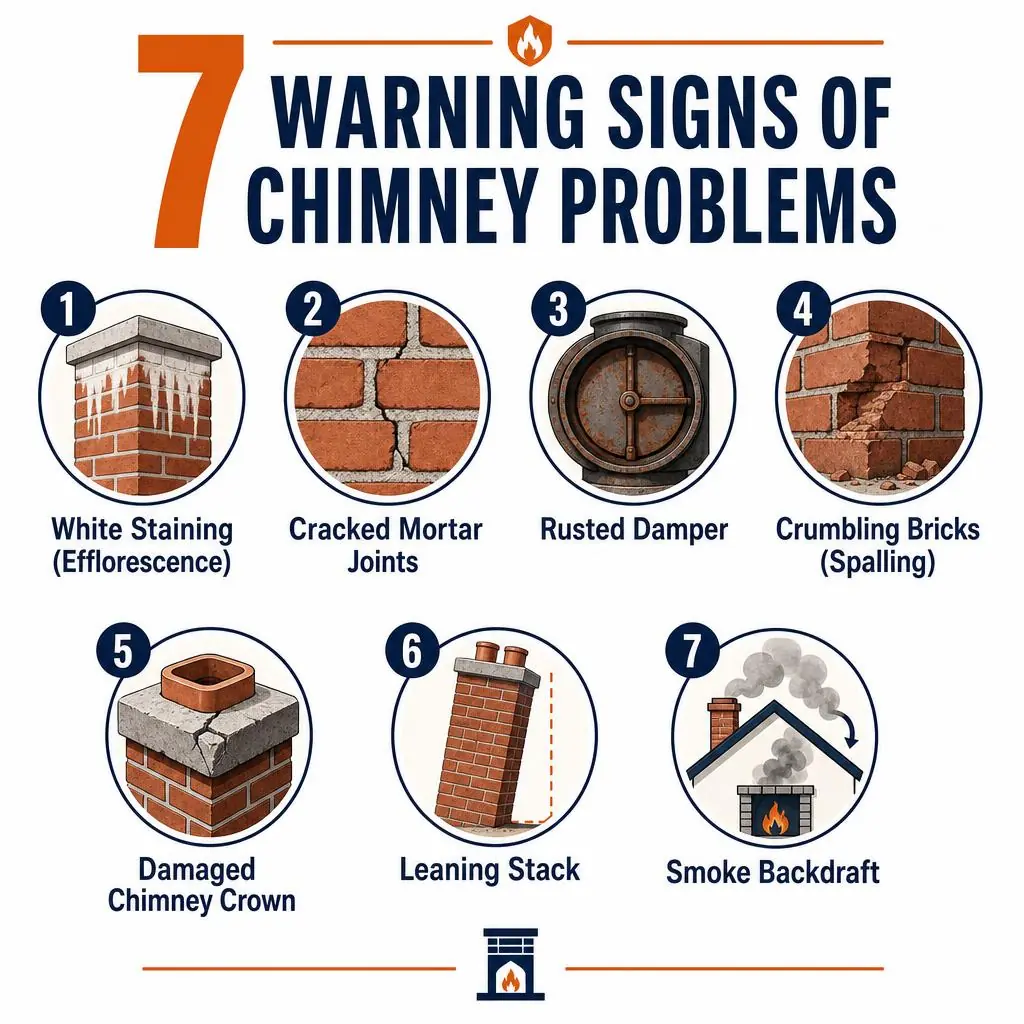
1. White Staining on the Brick
White, chalky marks on the chimney are called efflorescence. They mean water is moving through the brick. The water carries salts to the surface and leaves them behind as it dries.
Efflorescence is one of the earliest signs of chimney failure. Brush it off and watch. If it comes back, you have a moisture problem inside the stack. In coastal Irish homes, salt-laden air speeds this up, so even a young chimney can show staining within a few winters.
2. Cracked or Missing Mortar Joints
Mortar holds your bricks together. It also keeps water out. When the joints crack or fall out, the whole chimney weakens and starts to move in high winds.
Check the joints from the ground with binoculars. Look for gaps, loose chunks, or a sandy texture. This level of chimney damage needs repointing before winter. Use the right mortar mix for the age of the house; modern Portland cement is too hard for older Irish brickwork and will trap damp inside the stack.
3. Spalling or Crumbling Bricks
Spalling is when brick faces flake or pop off. You may see brick chips on the roof or in the gutter. The cause is almost always trapped moisture and freeze-thaw cycles.
Spalled bricks lose strength fast. Replace them early. If you wait, the damage spreads and the repair gets much bigger. A single spalled brick is a cheap swap; ten spalled bricks usually mean a full stack rebuild.
4. Rust on the Damper or Firebox
Open the damper and look inside with a torch. Rust on the metal means water is sitting where it should not. A stiff or stuck damper is the same warning.
Rust often points to a failed chimney cap or a cracked crown above. Both are common chimney issues in older Irish homes. Left alone, a rusted damper can seize shut and stop you from closing the flue when the fire is out, wasting heat all year round.
5. Damaged Chimney Crown
The crown is the concrete slab on top of the chimney. It sheds rain away from the flue. Cracks in the crown let water pour straight into the structure.
You usually need a ladder to see the crown. If you are not comfortable on a roof, book a chimney inspection instead. A safe set of eyes is worth the call. A good inspector will also send photos so you can see the damage yourself before approving any repair.
6. Missing or Damaged Chimney Cap
The cap sits on top of the flue. It blocks rain, leaves, and birds. A missing cap is one of the fastest paths to a damaged chimney.
Chimney cap replacement is one of the cheapest jobs we do. It also prevents thousands of euros in future damage. Do not skip it. A stainless steel cap with a bird mesh lasts decades and pays for itself the first time it stops a jackdaw nest blocking the flue.
7. Leaning or Tilted Stack
Stand back from the house and check the chimney against a vertical line, like a downpipe. Any lean is serious. These are signs that the chimney is collapsing or that the base has shifted.
Stop using the fireplace right away. Call a professional the same day. A leaning stack can fall and damage the roof, the gutters, or a person below. In storm season, never wait for the weather to pass; a leaning stack is the first thing to come down in high winds.
8. Smoke Coming Back into the Room
Smoke should rise up the flue, not drift into the room. Backdraft means the chimney is blocked, the flue is too cold, or the draw is poor.
A blocked flue chimney is also a fire risk. Stop the fire, ventilate the room, and book a sweep and inspection. Common blockages we find in Ireland are jackdaw nests, fallen mortar from cracked joints, and soot build-up from burning wet timber.
9. Strong Smell from the Fireplace
A sharp, smoky, or tar-like smell points to creosote build-up. Creosote is the sticky black layer left by burning wood. It is flammable.
A musty smell points to water. Either way, the smell is your chimney asking for service. Smells often get worse in damp weather when humidity inside the flue rises; that is your strongest hint that moisture is the cause.
10. Damaged Wallpaper or Ceiling Near the Chimney
Brown stains on the ceiling beside the chimney mean water is leaking in. The cause is often failed flashing, a cracked crown, or a missing cap.
Fix the source on the roof first. Then repair the inside. Painting over the stain without fixing the leak only hides the problem. Use a stain-block primer before fresh paint; the brown mark will ghost back through even after the leak is sealed.
11. Shaling: Bits of Flue Tile in the Firebox
Small pieces of clay or ceramic in the firebox are pieces of the flue liner. This is one of the strongest signs the liner is failing.
A broken liner lets heat reach the brick and timber around the chimney. That raises the chance of a house fire. Do not light another fire until a pro checks it. A camera survey takes under an hour and gives you a clear video record of the liner’s condition.
12. Higher Heating Bills
A poor draw makes your fire less efficient. You burn more wood for less heat. Cracks in the stack also let warm air escape.
If your bills are climbing for no clear reason, a chimney inspection is a smart first step. Even a small unsealed crack near the flue can act like a permanent open window and pull warm air from the room all winter long.
How To Tell If You Have a Chimney Fire
Many homeowners ask us how to know if they have a chimney fire. Some chimney fires are loud and obvious. Others are slow and silent. Both cause serious damage.
Watch for these signs during or after a fire:
- A loud cracking or popping sound from the flue.
- A deep, rumbling noise like a low aircraft.
- Dense smoke is pouring from the top of the chimney.
- Bright flames or sparks coming out of the chimney pot.
- A very hot chimney breast wall inside the house.
- A strong, intense smell, far stronger than normal wood smoke.
If you see any of these, stop the fire, leave the house, and call the fire service. After the event, you must book an inspection. A chimney that has had a fire is rarely safe to use again without repair, even if nothing looks damaged on the outside.
People also ask how you can tell if you have a chimney fire after the event has passed. Look for warped metal parts, cracked flue tiles, creosote that looks puffy or honeycombed, and a discoloured chimney cap. Roof tiles around the stack may also be scorched, with a faded ring where soot landed and burned off.
Tell your insurer the same day, even if the damage looks small. Most Irish home policies require the event to be reported within 24 to 48 hours for the claim to stand.
How To Know If Your Chimney Liner Needs Replacing
The liner is the inner skin of the flue. It guides smoke up and protects the brick from heat. Knowing how to know if the chimney liner needs replacing keeps your home safe and your insurance valid.
Replace the liner if you see any of the following:
- Pieces of clay tile in the firebox.
- White stains on the outside of the chimney.
- Poor draw or smoke spilling into the room.
- The liner is older than 50 years and has never been checked.
- A chimney fire has happened, even a small one.
Stainless steel liners are the most common replacement in Ireland today. A 316-grade liner suits wood and smokeless fuel. A 904-grade liner is heavier-duty and handles peat and turf better, which still matters in many rural homes.
What a Chimney Flue Looks Like
Homeowners often ask us what a chimney flue looks like. The flue is the vertical passage inside the chimney. Modern flues are lined with clay tiles, stainless steel, or cast-in-place cement.
From below, looking up with a torch, you should see a clean, smooth tube. You should not see daylight at odd angles, broken edges, or thick black build-up. Any glossy black layer thicker than a few millimetres is creosote and needs a sweep before the next fire.
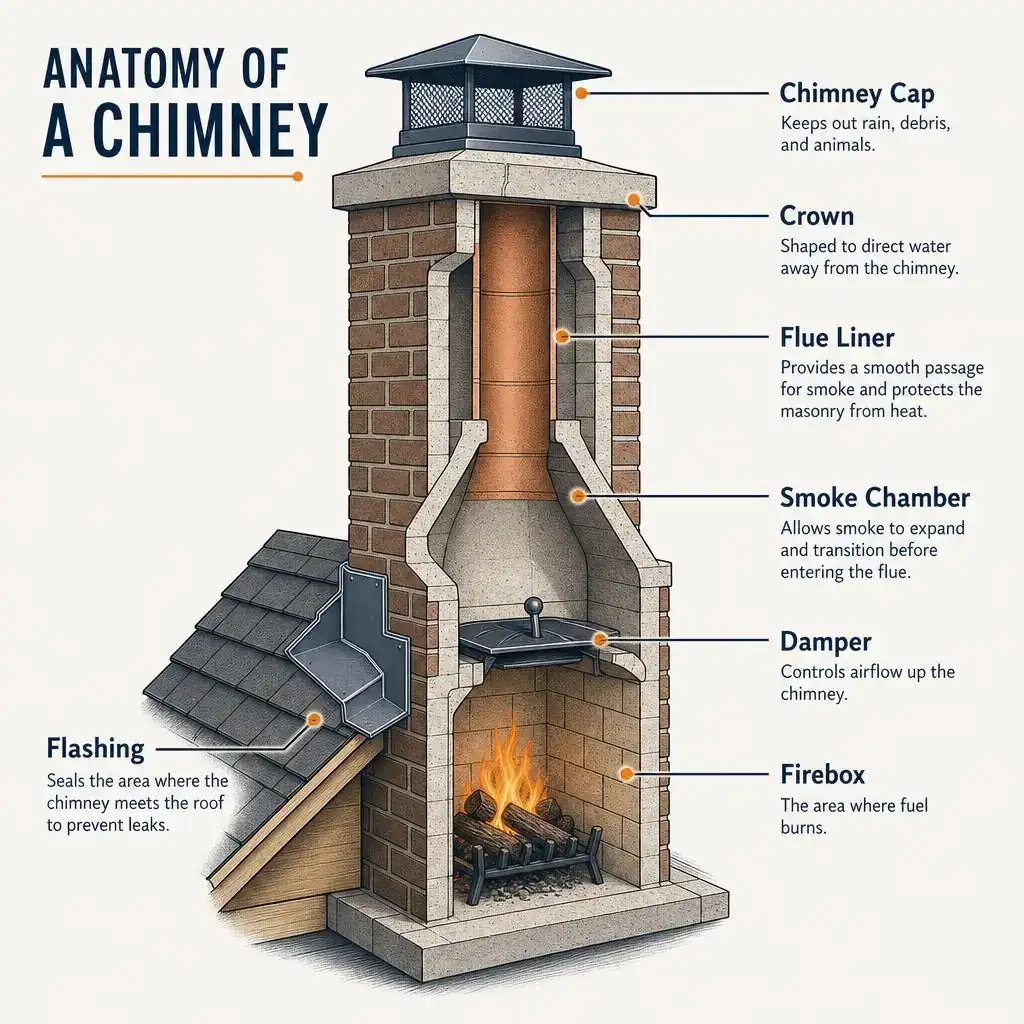
Anatomy of a chimney. Knowing the parts helps you spot problems early.
When To Book a Chimney Inspection
We recommend a full chimney inspection once a year. The best time is late summer or early autumn, before you start using the fireplace again. Booking ahead of the cold months also avoids the long winter waiting lists every Irish chimney company sees from October on.
Book sooner if you notice any of the following:
- You bought the house, and the chimney has no recent record.
- You changed the heating appliance or fuel type.
- There was a chimney fire, even a small one.
- Do you see any signs of chimney problems listed above?
- A storm has passed, and the chimney looks different from the ground.
DIY Checks vs Professional Service
You can do plenty from the ground. Use binoculars. Walk around the house. Look inside the firebox with a torch. These checks catch most early issues and cost you nothing.
Leave roof work, liner work, and smoke testing to a pro. A trained fireplace service team has the tools, the ladders, and the insurance to do it safely. They also carry the camera kit needed to give you a proper video record of the flu’s condition.
Never mix DIY repairs with insurance claims. If a fault is later linked to a botched home fix, the insurer can refuse the claim outright.
Typical Repair Costs in Ireland
Costs vary by access, height, and damage. As a rough guide:
- Chimney cap replacement: €150 to €400.
- Repointing mortar joints: €500 to €1,500.
- Crown repair or rebuild: €600 to €1,800.
- Flue liner replacement: €1,200 to €3,500.
- Full chimney rebuild: €2,500 to €6,000.
For a detailed breakdown, see our guide on chimney repair costs in Ireland. Always get two written quotes before approving work over €1,000, a proper firm will photograph the fault and explain exactly what each line on the quote covers.
How To Prevent Chimney Damage
Most chimney issues come from water and neglect. A simple yearly routine prevents both and adds many years of safe life to the stack.
- Sweep the chimney once a year, more if you use it often.
- Book a yearly fireplace inspection.
- Fit and maintain a proper chimney cap.
- Reseal the crown every few years.
- Burn dry, seasoned wood only. Wet wood creates creosote fast.
- Check flashing after heavy storms.
Keep every sweep certificate, photo, and invoice in one folder. This record protects your insurance cover and adds value when you eventually sell the home.
Frequently Asked Questions
How do I know if I have a chimney fire?
Listen for loud cracking, rumbling, or a roaring sound. Watch for thick smoke or flames at the top of the chimney. Feel the chimney breast wall. If it is very hot, you may have a fire inside. Stop the fire, get everyone outside, and ring 999 right away.
Can I use my fireplace if the mortar is cracked?
No. Cracked mortar lets heat and gases reach the timber inside the wall. Get a chimney damage repair quote before lighting another fire. Even small cracks let carbon monoxide pass into the room, and that gas can build up fast in a closed house in winter.
How often should I get a chimney inspection?
Once a year for a regular fireplace. After any chimney fire, storm damage, or change of appliance, you should book one straight away. If you burn solid fuel daily, two visits a year is wiser, one full inspection and one mid-season sweep.
Is chimney cap replacement worth it?
Yes. A cap is one of the cheapest parts of the chimney. It prevents water, birds, and debris from causing damage that costs many times more. A €200 cap easily prevents a €2,000 liner replacement down the line.
Final Word From Safe Stack
Chimneys give clear warnings before they fail. A stain, a smell, a cracked joint, or a strange sound is the chimney asking for help. Listen early, and the fix stays small.
If you spotted any of the signs of chimney problems above, do not wait for winter. Book a chimney inspection with Safe Stack Chimney Solutions and protect your home, your heat, and your peace of mind.