A broken chimney is more than a small problem. It can leak water, let in cold air, and even start a house fire. If you leave it too long, a small crack can turn into a big, costly rebuild.
The first thing most homeowners ask is simple. What does chimney repair cost in Ireland today?
At Safe Stack Chimney Solutions, we work on chimneys every week. Our team fixes small cracks, loose pots, and full-stack rebuilds. We know what each job costs, and we know where homeowners often get caught out.
In this guide, we share clear prices, common repair types, and the main things that change your final bill. You will leave knowing what to budget and what to ask your contractor.
Average Chimney Repair Cost in Ireland (2026)
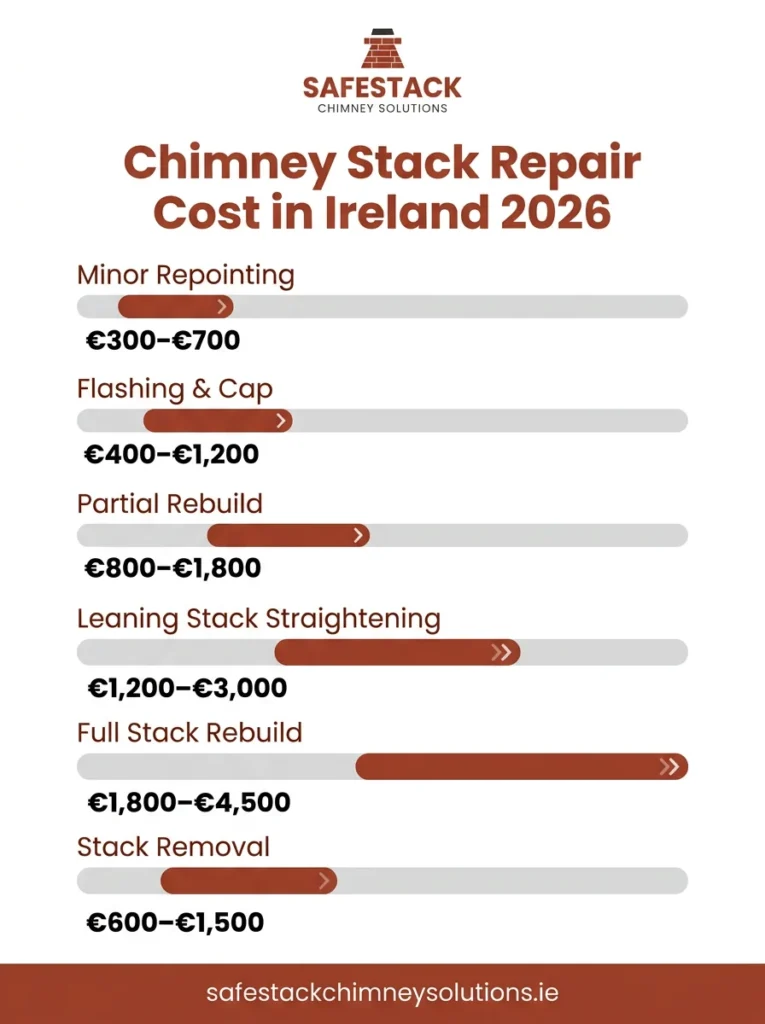
The average chimney repair cost in Ireland sits between €350 and €2,500 in 2026. The average chimney repair cost in Ireland sits between €350 and €2,500 in 2026. Most standard repairs land near €600 to €1,200, covering repointing, a new pot, fresh flashing, or a crown patch. Smaller fixes start under €350. A full rebuild can cost €4,500 once scaffold, materials, and labour are added.
The final price depends on three things: the type of damage, the height of the chimney, and access. A pot replacement on a bungalow is a half-day job. A full rebuild on a three-storey terrace is a week of work with a scaffold up the full gable.
| Repair Type | Typical Cost (EUR) |
| Chimney inspection | €80 – €180 |
| Chimney sweep | €70 – €120 |
| Chimney pot replacement | €250 – €600 |
| Flashing repair or replacement | €300 – €900 |
| Repointing (mortar joints) | €400 – €1,400 |
| Capping or cowl fitting | €180 – €450 |
| Flue lining | €900 – €2,500 |
| Crown repair | €350 – €1,100 |
| Full chimney rebuild | €2,000 – €4,500+ |
Prices include labour, materials, and basic scaffold for a standard two-storey home. They assume normal access, no hidden damage, and standard materials.
Use the table as a planning guide, not a fixed quote. Your bill can move based on roof pitch, brickwork condition, and location. Always get a written quote after an on-site inspection before you commit.
Chimney Repair Cost Calculator: A Simple Method
You do not need an app to estimate your job. Use this simple method to get a rough figure before you call a contractor. It will not be exact, but it gets you within 10% to 15% of a real quote, enough to plan your budget and spot a price that looks too high or too low.
Step 1: Start With the Base Repair Price
Pick the main job you need: repointing, a new pot, flashing, or a crown rebuild. Use the middle of the price range as your starting figure. If you need two jobs, add them together, but only count the scaffold once.
Step 2: Add Access and Scaffold
- €400 to €600 for a standard two-storey scaffold or chimney tower.
- €600 to €800 for a rear roof, side return, or hard-to-reach chimney.
- €150 to €250 if a roof ladder or harness is enough.
Step 3: Add Location and Height Uplifts
- Add 15% for Dublin, Cork, or Galway city.
- Add 20% for chimneys over three storeys or on a steep pitch.
- Add 10% for rural jobs more than 40 km from the contractor’s base.
Step 4: Add Extras
- €150 for skip hire and waste removal.
- €80 to €120 for a CCTV flue survey.
- 13.5% VAT if the quote is shown net of VAT.
Worked Example
A repoint on a two-storey Dublin semi-detached home:
- Base repoint: €900
- Scaffold: +€600
- Dublin uplift (15%): +€225
- Estimated total: €1,725
If the same chimney also needed a new pot, you would add €250 to €400, but pay nothing extra for the scaffold. That is why grouping jobs into one visit keeps your overall chimney repair cost down.
Note: this calculator gives a guide price only. Always confirm the final cost with a written quote from a qualified chimney contractor after an on-site inspection.
How to Lower Your Chimney Repair Costs
Smart planning can cut your bill without cutting quality. Use these tips before you book.
- Get three written quotes from local firms. Prices for the same job can vary by hundreds of euros. Three quotes help you spot anyone who is too high or too cheap.
- Book in spring or summer. Most chimney calls come in autumn and winter. Off-season work often means shorter waits and better pricing.
- Group jobs on the same scaffold. Access can be a third of your bill. Combining a repoint, a new pot, and a flashing check in one visit means you pay for access once.
- Ask for a fixed price, not a day rate. This protects you if the job runs long or hits hidden damage.
- Keep records of past sweeps and inspections. Dated certificates and photos help with insurance claims and often mean a faster, cheaper quote.
Used together, these steps can cut your chimney repair costs by 10% to 20%, sometimes more on larger jobs.
When to Repair and When to Rebuild
Many homeowners ask if a rebuild is needed. The answer depends on the brick-and-mortar state. Use this rule of thumb.
- Less than 30% damage. Repoint and replace parts.
- 30% to 60% damage. Partial rebuild from the roofline.
- Over 60% damage. Full rebuild is safer and lasts longer.
A good contractor will show you photos from the roof. Ask for them before you agree to any rebuild quote.
Does Home Insurance Cover Chimney Repair?
Standard home insurance in Ireland covers sudden, accidental damage. Typical covered events include:
- Storm or lightning strike damage.
- A falling tree or branch hitting the stack.
- Impact damage from a vehicle or debris.
- Fire damage to the chimney or flue.
Named storms, such as Storm Éowyn or Storm Darragh, usually trigger fast-track claim handling with most Irish insurers, so report the damage within 24 to 48 hours.
Insurance does not cover wear and tear. The following are treated as upkeep and paid by the homeowner:
- Cracked or missing mortar.
- A sunken or crumbling crown.
- Slowly failing flashing.
- Bricks loosened over the years of weather.
Most chimney repair costs from age and weather come out of the homeowner’s pocket, not the insurer’s.
How to Protect Your Claim
Keep a record of past sweeps and inspections. The following helps prove the chimney was sound before the storm:
- Dated photos of the stack from previous years.
- Written reports or certificates from your sweep.
- Receipts for any prior repair work.
If damage does happen, take fresh photos from the ground straight away, then call your insurer before you arrange any repair work, as it is often rejected.
Signs Your Chimney Needs Repair
You do not need to climb the roof to spot trouble. At Safe Stack, we get calls every week from people who saw one of these signs and waited too long. If you catch them early, the fix stays small and the cost stays low.
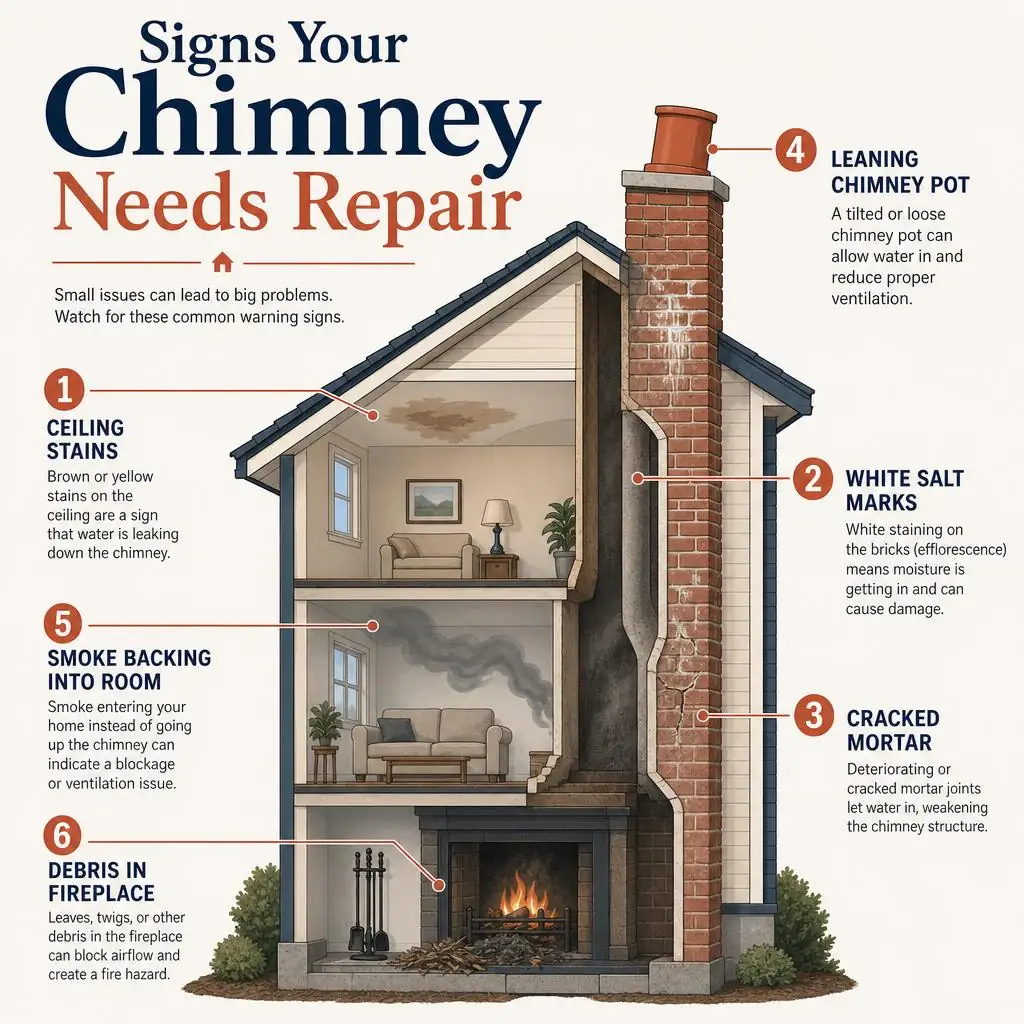
- Brown stains on the ceiling near the chimney.
- White salt marks on the outside bricks. This is called efflorescence.
- Cracked mortar, or mortar missing between the bricks.
- A chimney pot that leans, or a cap that looks loose.
- Smoke that blows back into the room when you light a fire.
- Bits of brick or mortar in the fireplace.
If you spot two or more of these signs, book an inspection. From what we see, the jobs that cost the most are the ones that waited the longest.
How Often Should You Service a Chimney?
How often you service a chimney depends on the fuel you burn and how often you light the fire. Use this simple schedule as a starting point:
- Wood or coal, regular use: sweep once a year.
- Heavy solid-fuel use: sweep twice a year, once before winter and once mid-season.
- Gas or oil flues: a check every one to two years.
- Full chimney inspection: every two to three years, even if you barely use the fire.
Why Regular Checks Save Money
Regular checks find small issues before they grow. A sweep will spot early signs of trouble, such as:
- A cracked or worn flue liner.
- Loose or leaning chimney pots.
- Damp staining inside the chimney breast.
- Birds or nests at the top of the stack.
Catching these early keeps a €100 problem from turning into a €1,500 rebuild.
Insurance and Record Keeping
A €100 yearly sweep can save you €1,000 or more in future repairs. It also keeps your home insurance valid; many Irish policies require proof of an annual sweep before they pay out on a chimney fire claim.
Keep the certificate the sweep gives you with your policy documents. This simple habit is the cheapest way to control long-term chimney repair costs.
Frequently Asked Questions
How much does it cost to repair a chimney in Ireland?
Most chimney repairs cost €350 to €2,500. The average job pays around €900. The price depends on damage, height, and access.
How much does chimney repair cost for a small crack?
A small crack repair often costs €250 to €500. Catching it early stops larger rework later.
What is the average cost for chimney repair in Dublin?
Dublin prices run 10% to 20% higher than the national average. Plan for €800 to €1,500 for a standard repair.
Is chimney repair worth the cost?
Yes. A small repair today prevents a rebuild later. A €600 fix can stop a €4,000 rebuild in a few years.
How long does a chimney repair last?
Quality repointing lasts 25 to 50 years. A new pot lasts 30 years. A full rebuild lasts 60 years or more with normal use.
Get a Fixed Price Chimney Repair Quote
You now know the real chimney repair cost ranges, the main job types, and the smart ways to plan your budget. The next step is a proper inspection by a chimney expert.
Contact Safe Stack Chimney Solutions for a free quote. We give you clear pricing, honest advice, and lasting repairs across Ireland.