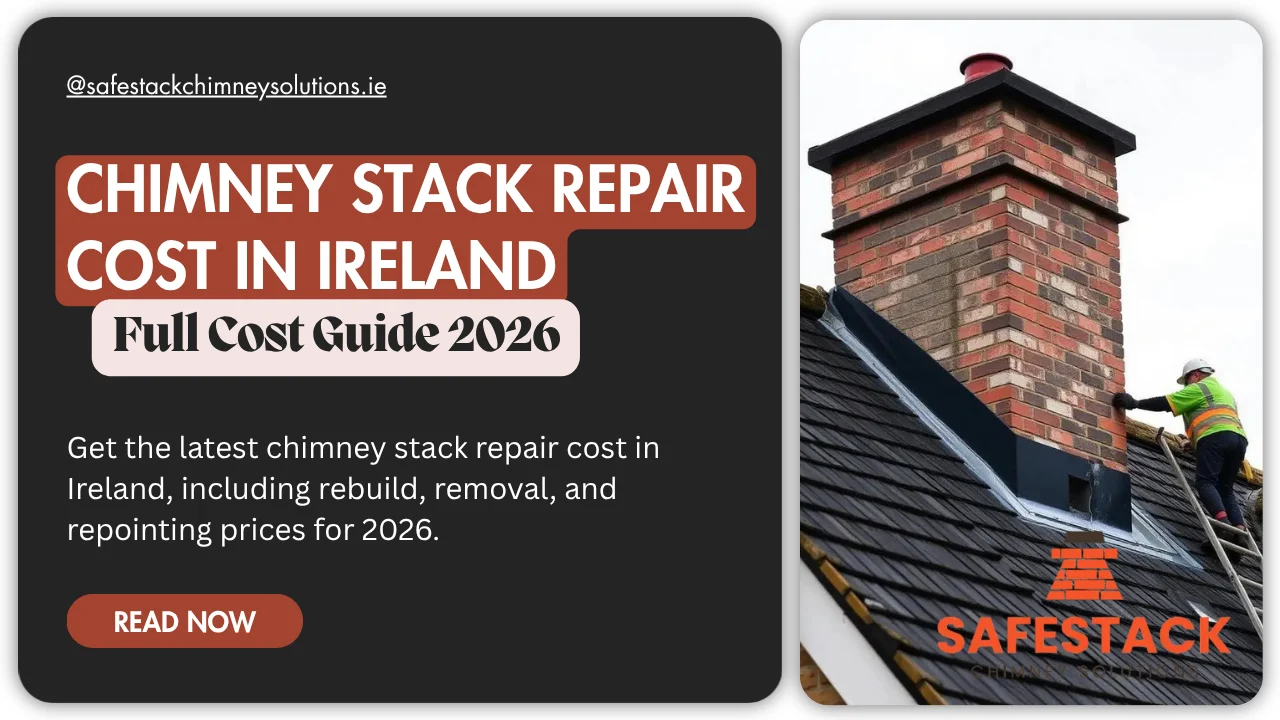
The chimney stack is the brick tower that sits above your roof. It holds the flue, the pot, and the crown. When it cracks, leans, or starts to wear, water and weather damage can spread quickly through the structure and into your home.
This guide shows the real chimney stack repair cost in Ireland for 2026. You get clear prices, the main cost drivers, and the warning signs that tell you a simple repair will not be enough. Fixing problems early can prevent more serious structural damage and higher costs later.
What Is a Chimney Stack?
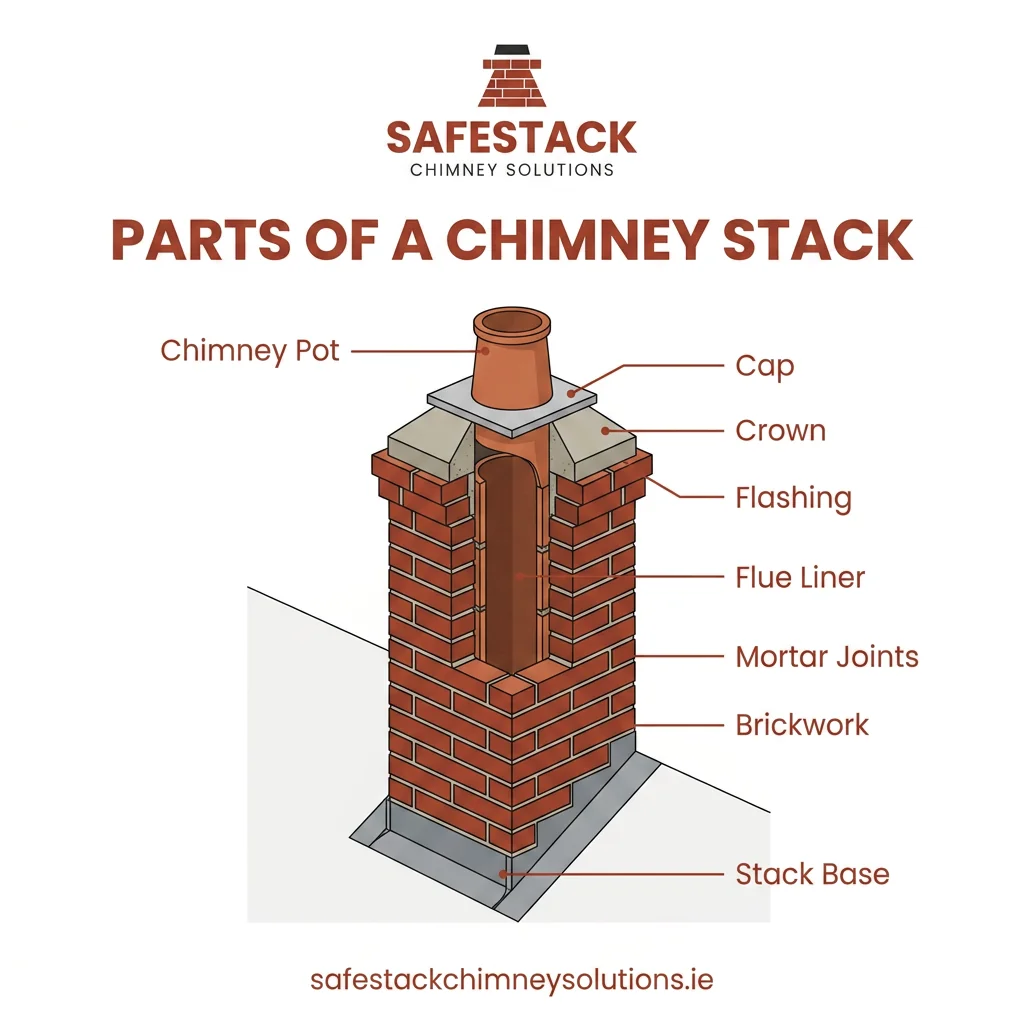
The chimney stack is the brick or stone structure above the roof. It carries smoke and gases out through the flue and helps keep out rain, wind, and frost.
It is made up of parts like the flue, crown, flashing, and chimney pot. Each part can wear out on its own. Cracked mortar, loose bricks, or a damaged crown can all lead to water getting in. Knowing these parts helps you find the real problem fast.
Average Chimney Stack Repair Cost in Ireland
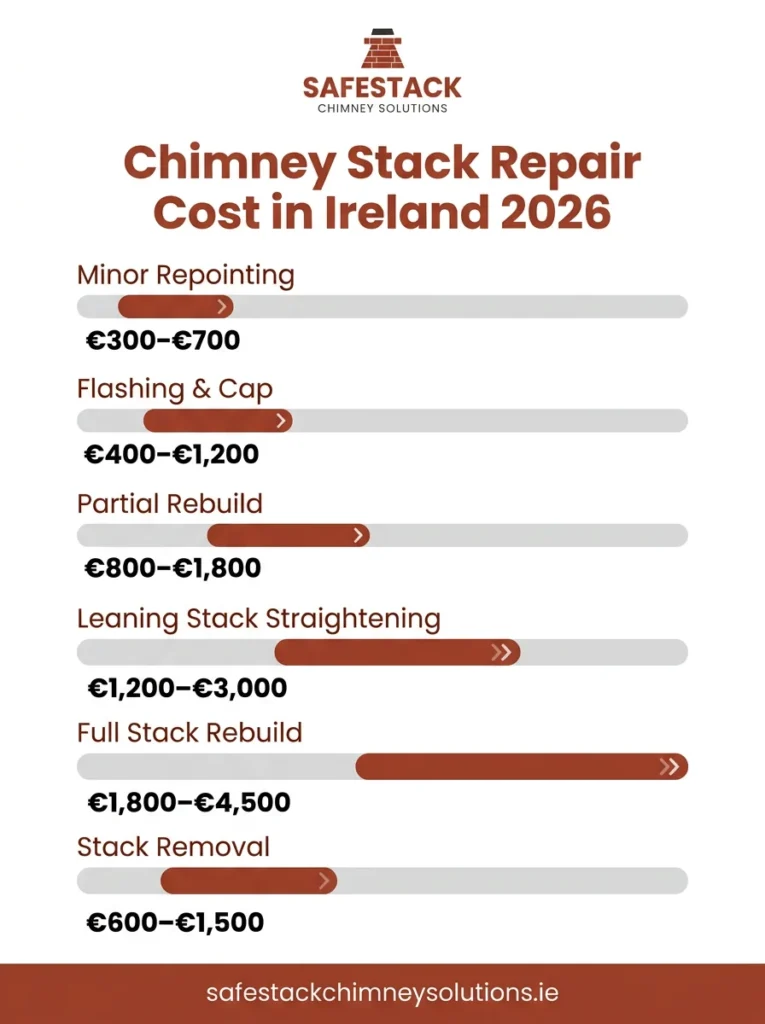
The average chimney stack repair cost in Ireland in 2026 sits between €400 and €4,500. Most homes pay near €1,200 for a mid-level job with scaffolding.
The cost to repair chimney stack work changes with damage, height, access, and material. The table below shows real 2026 prices.
| Repair Type | Typical Cost (EUR) |
| Minor repointing | €300 – €700 |
| Flashing & cap replacement | €400 – €1,200 |
| Partial stack rebuild | €800 – €1,800 |
| Leaning stack straightening | €1,200 – €3,000 |
| Full stack rebuild | €1,800 – €4,500 |
| Stack removal & cap-off | €600 – €1,500 |
How Much Does It Cost to Repair a Chimney Stack?
Many homeowners ask how much it costs to repair a chimney stack. The honest answer depends on the damage type. Here are the four most common jobs and what they cost.
1. Repointing the Stack
Repointing means raking out old mortar joints and packing in fresh mortar. It fixes weather damage before bricks loosen. Price: €300 to €700 for a standard stack.
2. Partial Rebuild
Some stacks fail only at the top. A pro takes down the loose courses and rebuilds with matching brick. Price: €800 to €1,800.
3. Full Rebuild
A full rebuild starts at the roof line and builds a brand-new stack. It includes new flashing, a new crown, and often a new pot. Price: €1,800 to €4,500.
4. Stack Removal
If the stack is unused, removal is often cheaper than rebuilding. The roofer caps off the roof and weatherproofs the area. Price: €600 to €1,500.
Leaning Chimney Stack Repair Cost
A leaning stack is a serious problem. It can fall in a storm and crush part of the roof. Leaning chimney stack repair cost in Ireland runs from €1,200 to €3,000.
The price depends on the cause. Common causes include:
- Failed mortar on one side of the stack.
- Roof timber rot is pulling the base out of line.
- Frost damage on the prevailing wind side.
- Sulphate attack from old soot inside the flue.
A small lean often needs straightening and repointing. A bad lean needs a full takedown and rebuild. Never wait on a leaning stack. It is a safety risk.
What Drives Chimney Stack Repair Costs?
Six main factors set the chimney stack repair costs in your quote. Knowing each one helps you spot a fair price from a padded one.
1. Damage Severity
A small repoint costs far less than a full rebuild. The deeper the damage, the higher the bill. Pros check the brick, mortar, flashing, and the crown.
2. Stack Height
A tall stack needs more brick, more mortar, and more time. It also needs taller scaffolding. Two-storey homes always cost more than bungalows.
3. Roof Access
A steep slate roof is harder to work on than a low concrete tile roof. Tight side gardens block scaffold trucks. Hard access adds 10 to 30 per cent.
4. Scaffolding
Most stack work needs scaffolding for safety. Scaffolding adds €400 to €1,200 to the total. Some small repoint jobs use roof ladders instead.
5. Materials
A reclaimed brick match costs more than a standard brick. Lime mortar costs more than cement mortar. Heritage homes often need the pricier option.
6. Location in Ireland
Dublin, Cork, and Galway labour rates run 10 to 20 per cent higher than rural counties. Coastal homes also face faster weather damage from salt air.
Signs Your Chimney Stack Needs Repair
A failing stack gives clear warning signs. Most are easy to spot from the ground with binoculars or from the attic with a torch. Walk around your house once a season and look up. Watch for these:
- Cracked or missing mortar between bricks.
- Bricks that look loose, bulged, or pushed out.
- Visible lean to one side, even a small one.
- White salt stains (efflorescence) on the brickwork.
- Damp patches on the ceiling near the chimney breast.
- Rust streaks on the flashing or cap.
- Bits of brick or mortar in the gutter after a storm.
- A musty smell in the room with the fireplace.
A €400 repoint today often saves a €4,000 rebuild later. Book a check at the first sign of damage. Irish weather is hard on stacks, so even small faults grow fast through a winter of wind and frost.
Repair, Rebuild, or Remove?
Choose the right option based on damage and how you use the fireplace below. A good roofer will walk you through all three before you sign anything.
- Repair: Pick this when the stack is sound but the mortar or flashing is worn. Cheapest option and quickest turnaround.
- Rebuild: Pick this when bricks are loose, the stack leans, or the crown is broken. More upfront cost but a 40-year fix.
- Remove: Pick this when the stack is unused, and you want lower upkeep. The roofer caps off the hole and weatherproofs the area.
Removal can lower your home value if the fireplace below is a feature buyers want. It also rules out future stove or open fire use. Think long term before you cap off – once the stack is gone, rebuilding from scratch costs far more than a one-off repair.
Is Chimney Stack Repair Covered by Insurance?
Sometimes. Irish home insurance often covers sudden storm damage to a chimney stack. It rarely covers slow wear and tear, since insurers treat upkeep as the owner’s job.
You may have a claim if a storm cracked or toppled the stack, a tree fell on it, or lightning struck. Named storm events (Éowyn, Darragh, and similar) usually trigger fast-track claim handling.
You likely have no claim if the mortar aged out, frost slowly split the bricks, or the original build was poor. Annual inspection records help prove you kept up with maintenance.
Take dated photos before any work. Get a written report from the roofer with cause, scope, and cost. Send both to your insurer within 24 to 48 hours of damage showing up. Late reports are the top reason valid claims get rejected in Ireland.
How to Get a Fair Quote
Follow these five steps to get a fair price on chimney stack repair work. A small amount of effort up front can save you hundreds and weed out cowboy operators.
- Get three written quotes from local pros with public liability cover.
- Ask if scaffolding is included or charged as an extra line.
- Ask for the brick and mortar type they will use, especially on older homes.
- Check the workmanship guarantee in writing; five years is the minimum.
- Avoid the cheapest quote if it skips scaffolding, prep, or cleanup.
A fair quote lists prep, scaffolding, materials, labour, and cleanup as separate items. A vague single-line quote hides shortcuts that cost you later. Ask for photos of past stack jobs before you decide.
How to Make Stack Repairs Last
A new or repaired stack can last 25 to 50 years with simple care. Most failures come from skipped maintenance, not bad workmanship. Use this short routine to protect your investment:
- Check the stack from the ground after each big storm.
- Clear gutters near the chimney twice a year, especially under trees.
- Look in the attic for damp in autumn and spring.
- Book a full chimney inspection every 5 years.
- Reseal flashing edges every 7 to 10 years.
- Sweep the flue once a year if the fire is in regular use.
Also, check the mortar joints and brick faces once a year for cracks or gaps. Small repairs done early can stop water from getting in and prevent bigger structural damage later.
Frequently Asked Questions
How long does a chimney stack repair take?
A repoint takes 1 to 2 days. A partial rebuild takes 2 to 3 days. A full rebuild takes 3 to 5 days, plus scaffold setup and a final cure day. Wet weather can add a day or two to any of these.
How long does a rebuilt stack last?
A well-built stack with quality brick and lime-based mortar lasts 40 to 60 years. Coastal homes in Galway, Clare, or Wexford may see shorter spans due to salt air. Sheltered inland stacks often go the full 60 years before needing any major work.
Do I need planning permission to repair my chimney stack?
No. Like-for-like repair and rebuild work is exempt under Irish planning rules. You may need permission if you change the height or shape, or if the home is a protected structure. Check with your local authority before you change anything visible.
Can I repair a chimney stack myself?
No. Stack work is at height and needs full safety gear, scaffold training, and brick-laying skills. Falls from chimneys are a top cause of serious home injury in Ireland. Even a small slip on a wet slate roof can cause life-changing injuries.
When is the best time of year to repair?
Late spring to early autumn is best. Mortar and cement set better in mild, dry weather between 5°C and 25°C. Avoid wet weeks and hard frost. Booking ahead in March or April often gets you a better price before the busy summer rush.
Book a Free Chimney Stack Inspection
You now know the real chimney stack repair cost in Ireland and what drives the price. The next step is a clear, honest quote for your home, based on a proper inspection rather than a guess from the ground.
Contact Safe Stack Chimney Solutions for a free stack inspection. We give fixed prices, full material details, a written 5-year guarantee, and lasting repairs across Ireland.