
A leaking chimney flashing is one of the most common roof faults we see in Irish homes. The fix is not always expensive. But the price changes a lot based on your roof, your chimney, and the type of flashing used. A few minutes spent learning the basics will save you hundreds of euros when quotes start landing in your inbox.
This guide gives you the real 2026 prices for chimney flashing repair costs in Ireland. We share what drives the cost, when DIY is risky, and how to spot a fair quote. Every figure here comes from jobs we price each week across Leinster, Munster, and Connacht.
What Is Chimney Flashing?
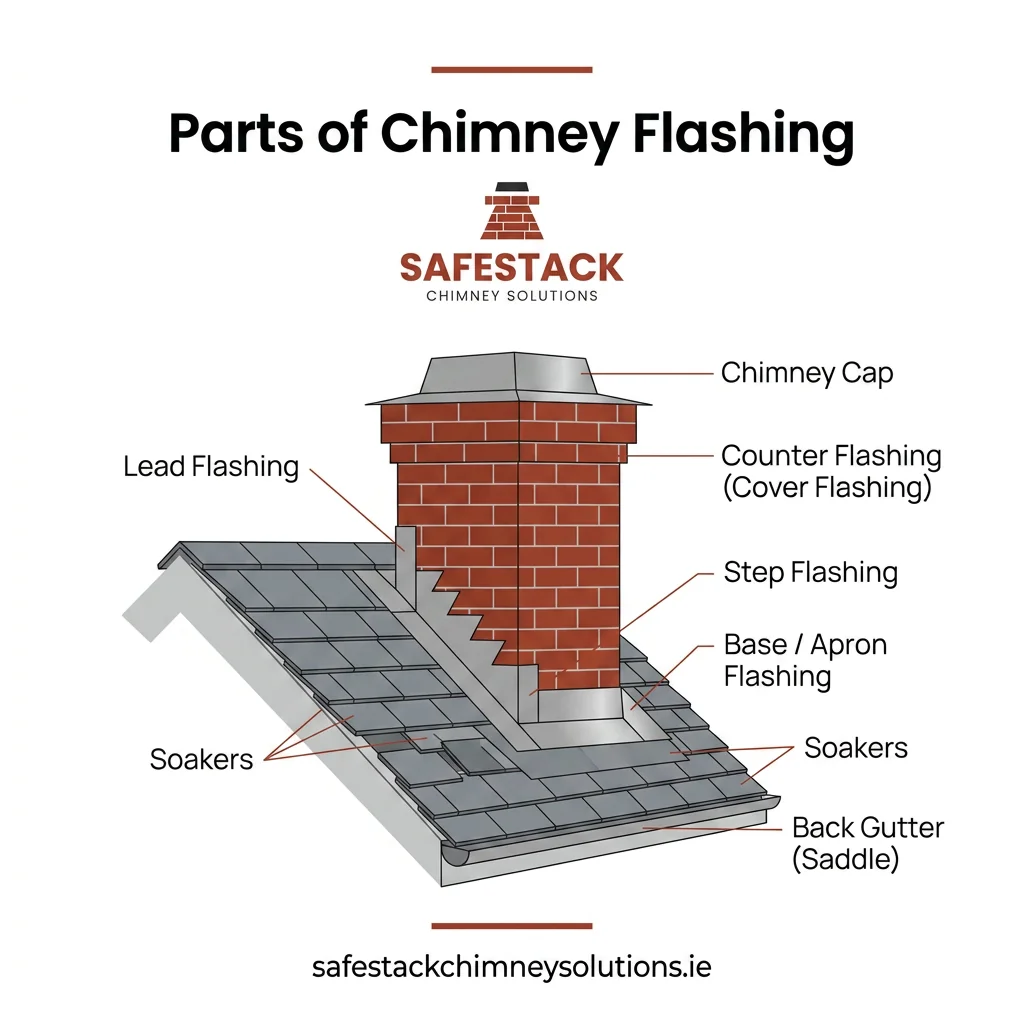
Chimney flashing is the metal strip that seals the gap between your chimney and the roof. It stops rain from running down the brick and into your home. Without it, even a light shower can soak the attic in a matter of hours.
Most Irish roofs use lead flashing. Lead lasts long and shapes well around the brick. Some newer homes use aluminium or lead-substitute materials, but these rarely match real lead for life span on a wet, windy Atlantic site.
Average Chimney Flashing Repair Cost in Ireland
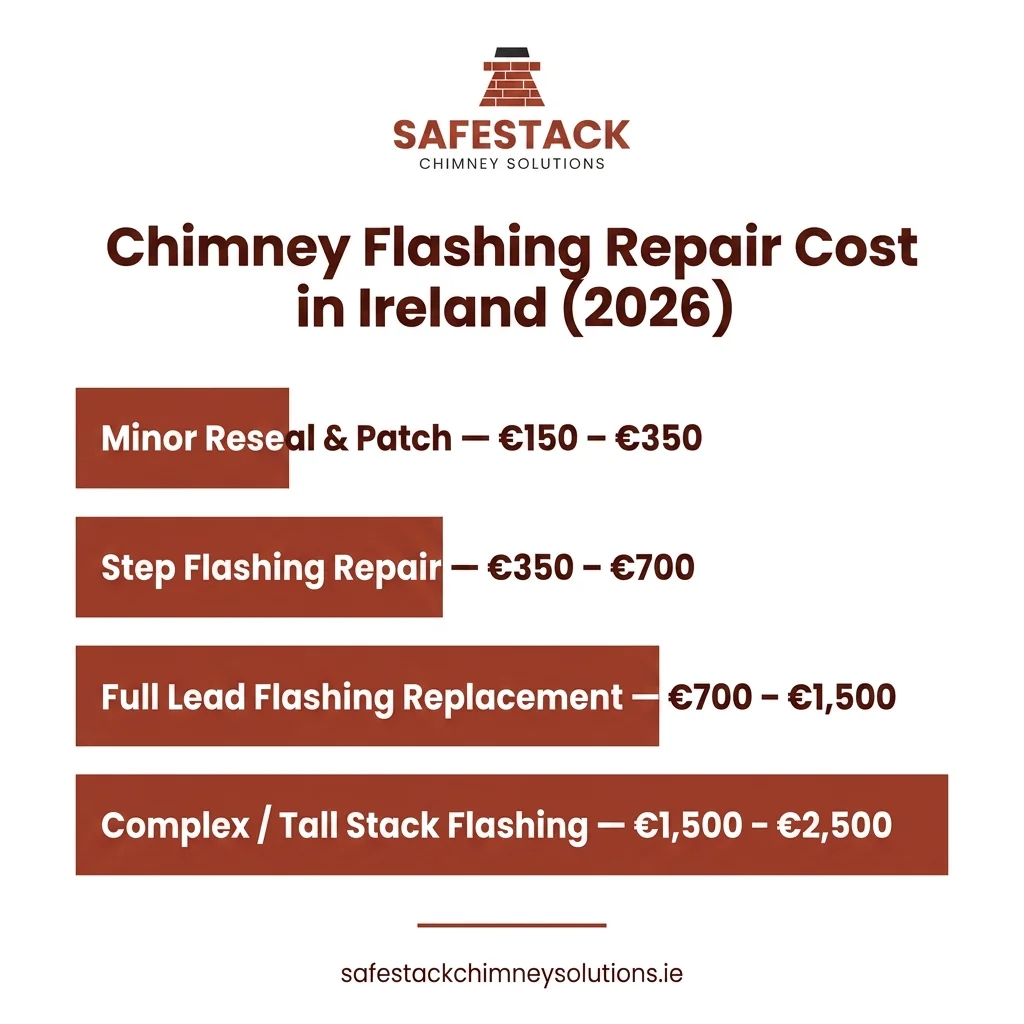
The average cost of chimney flashing repair in Ireland in 2026 sits between €350 and €1,500. Most homeowners pay around €600 for a standard lead flashing repair on a semi-detached two-storey home.
Below you will find typical prices by repair type. Use the table as a rough benchmark when you compare quotes; any figure that sits well outside this range is worth a second opinion.
| Repair Type | Typical Cost (EUR) |
| Minor reseal and patch | €150 – €350 |
| Step flashing repair | €350 – €700 |
| Full lead flashing replacement | €700 – €1,500 |
| Complex or tall stack flashing | €1,500 – €2,500 |
Chimney Lead Flashing Repair Cost
Lead is the gold standard for chimney flashing in Ireland. It is flexible, fire-safe, and lasts 40 years or more when fitted well. It is also fully recyclable, so a quality roofer will give you a small credit for any old lead they strip off.
The chimney lead flashing repair cost depends on the lead grade. Most homes use Code 4 or Code 5 lead. Heavier lead costs more but lasts longer and copes better with the freeze-thaw cycle of an Irish winter.
- Code 4 lead repair: €400 – €800
- Code 5 lead repair: €600 – €1,200
- Full lead replacement (Code 5): €900 – €1,800
Lead prices move with the metal market. Get a fresh quote each time, not an old one from a friend. If a quote uses Code 3 lead to save money, walk away; it is too thin for proper Irish chimney work.
What Drives the Cost to Repair Chimney Flashing?
The cost to repair chimney flashing changes based on six main factors. Knowing them helps you read a quote with confidence and spot any line that looks padded.
1. Roof Height and Pitch
A two-storey roof is harder to reach than a bungalow. Steep slate roofs need extra safety gear and slow the work down. A roof over 35 degrees usually pushes the price into the next tier.
2. Type of Flashing Material
Lead costs more than aluminium but lasts much longer. Most Irish homes use lead for both looks and durability. Aluminium and lead substitutes can save you 20 per cent up front, but they often need replacing twice in the time real lead would last.
3. Extent of Damage
A small reseal is cheap. A full strip-out and refit costs more. Hidden rot under the flashing also adds to the bill, especially if the roofer finds soaked timber that needs to be cut out before the new lead goes on.
4. Scaffolding Needs
A tall or awkward chimney often needs scaffolding. This adds €300 to €800 to the roof chimney flashing repair cost. A small mobile tower for a bungalow is cheaper, around €100 to €200 per day.
5. Location in Ireland
Labour rates in Dublin and Cork sit higher than in rural counties. Expect to pay 10 to 20 per cent more in major cities. Travel fees of €50 to €150 are common if your home is more than 30 km from the roofer’s base.
6. Access and Time of Year
Winter and storm season bring high demand. Booking in spring or summer often saves money and time. Many Irish roofers offer 5 to 10 per cent off jobs booked between April and August when the work diary is quieter.
How to Tell If Chimney Flashing Is Leaking
A leaking flashing rarely drips fast. It seeps in slowly and damages ceilings, walls, and insulation. Catching it early saves real money and avoids a much bigger plastering job later.
Watch for these signs of a leaking chimney flashing:
- Brown water stains on the ceiling near the chimney breast.
- Damp, musty smell in the attic.
- Peeling paint or wallpaper near the chimney wall.
- Black mould around the chimney corner.
- Wet timber or rusted nails in the attic above the chimney.
- White salt marks on internal brick near the fireplace.
If you see two or more of these signs, book a roof check. A small flashing repair now is far cheaper than a damaged ceiling later, and insurers may push back on a claim if the leak has clearly been ignored for months.
Can You Replace Chimney Flashing Without Replacing the Roof?
Yes. In most cases, we replace chimney flashing without touching the rest of the roof. The roofer lifts only the tiles or slats around the chimney base, fits the new lead, then beds the original tiles back in fresh mortar.
Once the new flashing is fitted, the same tiles go back in place. A full roof replacement is only needed when the roof itself is at the end of its life. If half the tiles around the chimney crack while lifting, however, it can be a sign that the whole roof is due for a fresh look in the next few years.
Is Chimney Flashing Covered by Insurance?
Sometimes. Home insurance in Ireland often covers sudden damage from storms or fallen trees. It rarely covers wear and tear, so the way the damage happened matters more than the size of the bill.
You may have a claim if:
- A storm tore the lead off the chimney.
- A falling branch cracked the flashing.
- Lightning damaged the chimney stack.
You likely do not have a claim if:
- The flashing rusted or aged out.
- The sealant simply failed over time.
- The roof was poorly fitted years ago.
Always take photos before any work starts. Send them to your insurer with the roofer’s written report. Clear evidence speeds up a claim and often unlocks a higher settlement. Most Irish home policies expect storm damage to be reported within 24 to 48 hours.
Do Roofers Fix Chimney Flashing?
Yes. Most roofers in Ireland fix chimney flashing as part of their core service. Some specialist chimney firms also do this work and often deliver a tidier finish, because they handle lead and mortar work every day rather than as a side job.
Pick a tradesperson who:
- Holds public liability insurance of at least €2 million.
- Works with Code 4 or Code 5 lead, not cheap substitutes.
- Gives a written quote with a clear scope.
- Offers at least a 5-year workmanship guarantee.
- Shows photos of past work on similar chimneys.
At Safe Stack Chimney Solutions, we handle both lead flashing repair and full chimney work. Every job ends with a photo report you can keep for your records and any future insurance claim.
DIY vs Professional Chimney Flashing Repair
DIY can work for tiny resealing jobs on a bungalow. Anything more is risky. Working at height on slate is the leading cause of home injuries in Ireland, and most household insurance does not cover medical costs from a DIY fall.
Skip the DIY route if:
- The chimney is over one storey high.
- The flashing is lifted, torn, or missing in parts.
- You can see daylight from the attic near the chimney.
- The roof is slate or fragile clay tile.
- You are not confident with lead dressing tools.
How Much Does It Cost to Repair Chimney Flashing vs Replace It?
A repair makes sense when the lead is sound, but the seal has failed. Replacement makes sense when the lead is split, brittle, or stripped off. The right call usually shows up in the first 10 minutes of a proper inspection.
- Repair: €150 – €500. Lasts 5 to 10 more years.
- Replacement: €700 – €1,500. Lasts 30 to 50 years.
A good roofer will tell you the truth. If they push replacement on a minor leak, get a second quote. Equally, a quick patch on badly aged lead is a false economy; it will fail within a winter or two, and you will pay twice.
How to Get a Fair Quote
Use these steps to get a fair flashing repair chimney cost in Ireland. Spending an hour on this stage saves hundreds of euros on the job.
- Get three written quotes from local pros.
- Ask each for the lead code and brand of sealant.
- Confirm if scaffolding is included or extra.
- Check the guarantee in writing.
- Pick the middle quote when in doubt, not the cheapest.
The cheapest quote often skips lead grade or scaffolding. That saving turns into a leak two winters later. Always ask for the roofer’s tax clearance number and a VAT receipt; a real pro hands these over without hesitation.
How to Stop Chimney Flashing Damage
Good care doubles the life of your flashing. Use this short routine each year, and your next big repair could be 20 years away.
- Look up at the chimney after every major storm.
- Check the attic for damp spots in autumn and spring.
- Clear gutters near the chimney to stop water pooling.
- Reapply lead sealant every 8 to 10 years.
- Book a roof inspection every 5 years.
If you notice signs of a leak, read our guide on how to fix leaking chimney flashing. Keep every photo, invoice, and inspection note in one folder. A clear maintenance record protects your insurance cover and adds value when you sell the home.
Frequently Asked Questions
How long does chimney flashing repair take?
A standard repair takes 3 to 6 hours. A full lead replacement takes one full day. Scaffolding adds a day for setup and removal, plus the hire fee runs from the day it goes up to the day it comes down.
How long does new lead flashing last?
Code 5 lead flashing fitted by a pro lasts 40 to 50 years. The sealant beads on top need a refresh every 8 to 10 years. In exposed coastal locations, knock 20 per cent off both numbers because of constant salt and wind exposure.
Can I just use roof sealant on a leak?
A tube of sealant is a short-term patch only. It buys you a few months. Book a proper lead repair as soon as you can. Long-term patching can also weaken any future insurance claim if a loss adjuster spots layers of old mastic on the lead.
Why is my new chimney still leaking?
New flashing can still leak if the lead was not dressed into the mortar joint. Ask the roofer to chase the lead into the brick, not just glue it on top. A proper chase is 25 mm deep and pointed with fresh mortar after the lead is wedged in.
What time of year is best for flashing repair?
Late spring through early autumn is best. Dry, mild weather lets the lead sit right and the sealant cure fast. Avoid the first cold snap of October, when many rushed patch jobs fail because the sealant never fully cures.
Book a Free Chimney Flashing Inspection
You now know the real chimney flashing repair cost in Ireland. The next step is a clear, honest quote for your home.
Contact Safe Stack Chimney Solutions for a free flashing inspection. We give fixed prices, lead-grade detail, and lasting repairs across Ireland.